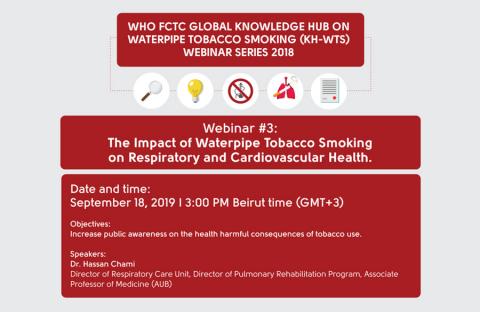
Webinar #3 The Impact of Waterpipe Tobacco Smoking on Respiratory and Cardiovascular Health

Date: Sep 18, 2019

Time: 3:00 P.M (GMT+3)

Topic: “Health Effects of Waterpipe Tobacco Use” 

Objectives:

  1. Increase public awareness on the health harmful consequences of tobacco use.
  2. To reduce the use and the intention to quit WTS among smokers-among young people and adults.

Facilitator:  Dr. Hassan Chami

Director of Respiratory Care Unit, Director of Pulmonary Rehabilitation Program, Associate Professor of Medicine (AUB)

Check the Webinar Presentation 0- Chami Waterpipe Smoking – Sept 15 2019

Check the Webinar Recording HERE

Share

Image
Image

Increased risk of COVID-19 infection amongst smokers and amongst waterpipe users

Increased risk of COVID-19 infection amongst smokers and amongst waterpipe users

Background

1- Smoking and increased risk of bacterial and viral infections

Smoking increases the risk of both bacterial and viral infections.

It has been documented that smokers incur a 2- to 4-fold increased risk of invasive pneumococcal lung disease, a disease associated with high mortality. Influenza risk is twofold higher and more severe in smokers compared with nonsmokers.[i] In the case of tuberculosis smokers also have a twofold increased risk of contracting the infection and a 4-fold increased mortality.

The mechanism of increased susceptibility to infections in smokers is multifactorial and includes alteration of the structural and immunologic host defenses. 

  • Structural changes: Tobacco smoke and many of its components produce structural changes in the respiratory airways. These changes include increased mucosal permeability, impairment of the mucociliary clearance, changes in pathogen adherence, disruption of the respiratory epithelium, and peribronchial inflammation and fibrosis..[ii]
  • Immunologic Mechanisms: Smoking weakens the function of body defense immune cells and the production of antibodies in humans and animals.[iii],[iv],[v]


Increased risk of Coronavirus infection amongst smokers

There is still no robust evidence to suggest an increased risk of infection amongst smokers; however, analysis of deaths from coronavirus in China[vi] shows that men are more likely to die than women, something that may be related to the fact that many more Chinese men smoke than women.  Among Chinese patients diagnosed with COVID-19 associated pneumonia, the odds of disease progression (including to death) were 14 times higher among people with a history of smoking[vii] compared to those who did not smoke. This was the strongest risk factor among those examined.

2-Use of Waterpipe and risk of infection transmission

Practice of waterpipe use

Waterpipe smoking is usually practiced in groups. The hose is passed from person to person, and the same mouthpiece is usually used by all the participants. Most smoking sessions last 45 to 60 minutes but may also continue for several hours.

Even if the pipe and mouthpiece is only used by one customer at a time, it should be noted that waterpipes and hoses are generally reused by other smoking customers at the same day It is therefore, not surprising, that waterpipe smokers are exposed to microorganisms that may be harmful to health.[viii],[ix][x]

How do the waterpipes get contaminated with infectious microorganisms?

The risk of transmission of infectious microbial agents through smoking waterpipes is high

  • If mouth pieces are not used individually the microorganisms can easily pass from mouth to mouth.
  • smokers often cough into hoses and moisture in tobacco smoke promotes the survival of microorganisms inside waterpipe hose.
  • Furthermore, the use of cold water in the water chamber for a cold airflow may facilitate the survival of viruses and bacteria.
  • The spread of infectious diseases could also result from the uncontrolled, manual preparation of narghile.

Evidence of Infectious Disease transmission though waterpipe

Waterpipes and mouthpieces have been implicated in an outbreak of pulmonary tuberculosis in Queensland, Australia.[xi],[xii] .El-Barrawy et al. [xiii] related infection with Helicobacter pylori to waterpipes smoking in Egypt. The risk of transmission of the hepatitis C virus through waterpipes smoking was also demonstrated by Habib et al. (2001).[xiv] Other viruses that can be transmitted are Epstein-Barr virus (EBV), herpes simplex virus and respiratory virus [xv]. Fungal infections have also been reported to be waterpipes transmitted diseases when a patient with acute myeloid leukemia showed invasive infection with Aspergillus sp.[xvi][xvii]

Measures were taken by some countries in view of the potential risk of COVID-19 infection though waterpipe use

Some countries in the Eastern Mediterranean Region such as Iran, Kuwait, Pakistan, Qatar and Saudi Arabia have banned the use of shisha in public places such as cafes, shisha bars or restaurants to avoid COVID-19 transmission.

3- Recommendations

  • Inform the public about the high risk of infection of COVID-19 when using waterpipe.
  • Complete ban of the use of waterpipes in all public establishments such as cafes, bars, restaurants, etc. with no exceptions even if the mouthpiece or hose is changed with each individual use. Avoid sharing waterpipe mouthpieces even in home settings.
  • Ensure the enforcement of the ban with adequate fines and penalties.
  • Inform the public about the increased risk of COVID 19 infection in smokers versus non-smokers.
  • Encourage smokers to quit smoking.


References:

[i] https://jamanetwork.com/journals/jamainternalmedicine/fullarticle/217624
[ii] Dye  JAAdler  KB Effects of cigarette smoke on epithelial cells of the respiratory tract.  Thorax 1994;49825- 834
[iii] Sopori  MLGoud  NSKaplan  AM Effect of tobacco smoke on the immune system. JH  DeanAE  LusterM  Kimereds. Immunotoxicology and Immunopharmacology New York, NY Raven Press1994;413- 432Google Scholar
[iv] Sopori  MLKozak  WSavage  SM  et al.  Effect of nicotine on the immune system: possible regulation of immune responses by central and peripheral mechanisms.  Psychoneuroendocrinology 1998;23189- 204
[v] Tollerud  DJClark  JWBrown  LM  et al.  The effects of cigarette smoking on T cell subsets: a population-based survey of healthy caucasians.  Am Rev Respir Dis 1989;1391446- 1451
[vi] https://www.telegraph.co.uk/global-health/science-and-disease/coronavirus-dangerous-smokers/
[vii] https://journals.lww.com/cmj/Abstract/publishahead/Analysis_of_factors_associated_with_disease.99363.aspx
[viii] Koul, P.A., Hajni, M.R., Sheikh, M.A., et al., 2011. Hookah smoking and lung cancer in the Kashmir valley of the Indian subcontinent. Asian Pac. J. Cancer Prev. 12, 519e24. [PubMed
[x] Daniels K.E., Roman N.V. A descriptive study of the perceptions and behaviors of waterpipe use by university students in the Western Cape, South Africa. Tob. Induc. Dis. 2013;11:4. [PMC free article] [PubMed] [Google Scholar] [Ref list]
[xi] Urkin, J., Ochaion, R., Peleg, A., 2006. Hubble bubble equals trouble: the hazards of water pipe smoking. Sci. World J. 6, 1990e7. [PMC free article] [PubMed] [Ref list]
[xii] Munckhof, W.J., Konstantinos, A., Wamsley, M., et al., 2003. A cluster of tuberculosis associated with use of a marijuana water pipe. Int. J. Tuberc. Lung Dis. 7, 860e5. [PubMed] [Ref list]
[xiii] El-Barrawy, M.A., Morad, M.I., Gaber, M., 1997. Role of Helicobacter pylori in the genesis of gastric ulcerations among smokers and nonsmokers. East Mediterr. Health J., 3: 316e21. [Ref list]
[xiv] Habib, M., Mohamed, M.K., Abdel-Aziz, F., et al., 2001. Hepatitis C virus infection in a community in the Nile Delta: risk factors for seropositivity. Hepatology 33, 248e53. [PubMed] [Ref list]
[xv] Knishkowy, B., Amitai, Y., 2005. Water pipe (narghile) smoking: an emerging health risk behavior. Pediatrics, 116, e113e9. [PubMed]
[xvii] Szyper-Kravitz, M., Lang, R., Manor, Y., et al., 2001. Early invasive pulmonary aspergillosis in a leukemia patient linked to aspergillus contaminated marijuana smoking. Leuk Lymphoma, 42, 1433e7. [PubMed]

Share

Image
Image

Q & A on tobacco use, including waterpipe use and COVID19 in EMRO

Questions and answers on tobacco use, including waterpipe use and COVID19 in the Eastern Mediterranean Regioni

What are the possible relations between tobacco use and the COVID19 epidemic?

Any kind of tobacco smoking is harmful tothe bodily systems, includingthe cardiovascular and respiratory systems[1][2]. COVID-19 can also harm these systems. Information fromChina, where COVID-19 originated, shows that people who have cardiovascular and respiratory conditions caused by tobacco use, or otherwise,are at higher risk of developingsevere COVID-19 symptoms[3]. Research on 55,924 laboratory confirmed cases in China shows that the crude fatality ratiofor COVID-19 patients is much higher among those with cardiovascular disease, diabetes, hypertension, chronic respiratory disease or cancer than those with no pre-existing chronic medical conditions[4]. Thisdemonstratesthat these pre-existing conditions may contribute to increasingthe susceptibility of such individuals to Covid-19.

Tobacco has a huge impact on respiratory health. The link between tobacco use and lung cancer is well-established, with tobacco use beingthe most common cause of lung cancer[5]. It alsosubstantially increases the risk of tuberculosis infection[6]. Further, tobacco use is also the most important risk-factor for chronic obstructive pulmonary disease (COPD), causing the swelling and rupturing of the air sacs inthe lungs, which reduces the lung’s capacity to take in oxygen and expel carbon dioxide, and the build-up of mucus, which results in painful coughing and breathing difficulties[7][8][9]. This may have implications for smokers, given thatsmoking is considered to be a risk factor for any lower respiratory tract infection[10]and the virus that causes COVID-19 primarily affects the respiratory system,often causing mild to severe respiratory 2damage[4]. However, given that COVID-19 is a newly identified disease, thelink between tobacco smoking and the diseasehas yet to be established.

There isan increased risk of more serious symptoms and death among COVID-19 patients that have underlying cardiovascular diseases (CVDs)[11][12]. According to the available evidence the virus that causesCOVID-19 (SARS-CoV-2) is from the same family as MERS-CoV and SARS-CoV, both of whichhave been associated with cardiovascular damage (either acute or chronic) [13][14]. Research has shown COVID-19 patients in China with CVDs are at greater riskof more severe symptoms[15]In addition, there is evidence that COVID-19 patients that have more severe symptoms often have heart related complications[16].This relation between COVID-19 and cardiovascular health is important because tobacco use and exposure to second-hand smoke are major causes of CVDs globally[17]. The effect of COVID-19 on the cardiovascular system could thus make pre-existing cardiovascular conditions worse. In addition, a weaker cardiovascular system among COVID-19 patients witha history of tobacco use could make such patientssusceptible tosevere symptoms,therebyincreasingthe chance of death[18].

How can use of waterpipe contribute to the spread of COVID19?

Waterpipes aretobacco products [19]and their use has both acute and long-term harmful effects on the respiratory and cardiovascular systems [20], likely increasing the risk of diseases including coronary artery disease and chronic obstructive pulmonary disease[21].

The communal nature of waterpipe smoking means that a single mouthpiece and hose areoftenshared between people, especially in social and communal settings[22]. In addition, the waterpipe apparatus (including the hose and chamber) itself may contribute to this risk by providing an environment that promotes the survival of microorganisms outside the body. Most cafés tend not to clean the waterpipes after each smoking session because washing and cleaning waterpipe parts is labour intensive and time consuming[23][24].These factorsincrease the potential for the transmission of infectious diseases between users[20].Consistent with this, evidence has shown that waterpipe use is associated with an increased risk of transmission of infectious agents such as respiratory viruses, hepatitis C virus, Epstein Barrvirus, Herpes Simplex virus, tuberculosis, Heliobacter pylori, and Aspergillus[25][26][27][28][29][30]. Social gatherings provide ample opportunityfor the virus that causes COVID-19 to spread [31].

Since waterpipe smoking is typically an activity that takes place within groups in public settings[22]andwaterpipe use increasesthe risk oftransmission of diseases, it could also encourage the transmission of COVID-19 insocial gatherings. When this smoking takes place in indoor areas, as it does in many places, the risk could be higher.

Will strengthened tobacco control measures help in this context?

In 2008, WHO introduced theMPOWER technical package,which is based on key tobacco demand reduction articles of the WHO Framework Convention on Tobacco Control (WHO FCTC),as follows:

  • Monitor tobacco use and prevention policies
  • Protect people from tobacco use
  • Offer help to quit tobacco use
  • Warn about the dangers of tobacco
  • Enforce bans on tobacco advertising, promotion and sponsorship
  • Raise taxes on tobacco.

Strengthened tobacco control measures including tobacco free public places and protection of people from second hand smoke as per the WHO FCTC Article 8 and its Guidelines will reducethe risk of suffering from severesymptoms. Lower tobacco use will reduce rates of many respiratory and cardiovascular conditions that are strongly associated with more serious COVID-19 symptoms and mortality.

Reducing the demand for tobacco products, including waterpipe, could also indirectly discourage the social gatherings that contribute to the spread of the virus.ú

Good respiratory and cardiovascular health is important for a COVID-19 patient topositivelyrespond and successfully recover from the disease.

Specifically regarding waterpipe usage, since it is often overlookedin tobacco control efforts, there is a significant opportunity for positive health outcomes at this time, both with respect to COVID-19 and generally, if immediate comprehensive tobacco control measures are takenthat include the control of waterpipe.

Countries can use the WHO’s highly effective MPOWER policy package to support their formulation and implementation of tobacco control measures.

How can regional tobacco control legislation support the limitation of the virus spreading?

The same considerations thatapply to tobacco control globally as per the WHO FCTC and the MPOWER policy packagealso apply to tobacco control within the Eastern MediterraneanRegion (EMR). Countries should seek to limit the use of waterpipe and other tobacco use in order to reduce its well documented health impactand improve people’s respiratory and cardiovascular health.

Controlling tobaccouse and reducing waterpipe usemay be important for reducing the risk of the transmission of the virus that causes COVID-19.It is important that the control of waterpipe use is taken especially seriously at this timeand within a comprehensive approach to control all tobaccouse in light of WHO FCTC obligations and MPOWER policy recommendations.

In general, WHO recommends that countries fully implementthe WHO FCTC and the MPOWER policy package.This includes a comprehensive ban onall forms of tobacco use,includingwaterpipe, in all public places (incl. cafes and restaurants).Such a ban may help prevent anyincreased risk of transmission of the virus that causes COVID-19 that may be related to tobacco use. Countries should ensure that this ban is fully enforced.

Why is this a good time to try and quit tobacco use?

Tobacco use dramatically increases the risk of many serious health problems, including both respiratory problems (like lung cancer, TB and COPD) and cardiovascular diseases. While this means that it is always a good idea to quit tobacco use, quitting tobacco use may be especially important at this time to reduce the harm caused by COVID-19.Tobacco users areprobably less likely to become infected if they quit because the absence of smoking helps reduce the touching of fingers to the mouth. Also, it is possible that they would better manage the comorbid conditionsifthey become infectedbecause quitting tobacco use has an almost immediate positive impact on lung and cardiovascular function and these improvements only increase as time goes on[10]. Such improvement may increase the ability of COVID-19 patients to respond to the 5infection and reduce the risk of death. Faster recovery and milder symptoms also reduce the risk of the transmission of the disease to other people.

What are the key lessons learnt from previous experiences?

From previous experience in responding to MERS-Cov and SARS-CoV, general precautions should be taken,especially in social gatherings[31].

Waterpipes may bea catalyst for social gatherings in environments thatcould increase disease transmission.

Previous evidence showsthatsmoking has adverse effects on the survival of individuals with infectious diseases[32]and evidence from otheroutbreaks caused by viruses from the same family as COVID-19 suggeststhat tobacco smoking could, directly or indirectly, contribute to an increased risk ofinfection,poor prognosis and/or mortality for infectious respiratory diseases[33][34].

What is next??

This document is based on the most updated available evidence.

Evidence is still evolving and the document will be subject to updates in light of any new emerging evidence. Regularlywe will look into the new available evidence and update the document.

In the context of COVID19 countries are encouraged to take the needed action to protect the public from the devastating health consequences of tobacco use in light of their international commitments under the WHO FCTC and WHO recommendations.

References

[1] World Health Organization, World Heart Federation, Cardiovascular harms from tobacco use and secondhand smoke: Global gaps in awareness and implications for action, Waterloo, Ontario, Geneva, 2012.

[2] World Health Organization, World No Tobacco Day 2018: Tobacco breaks hearts -choose health. not tobacco, Geneva, 2018.

[3] W.-j. Guan, Z.-y. Ni, Y. Hu, W.-h. Liang, C.-q. Ou, J.-x. He, L. Liu, H. Shan, C.-l. Lei, D. S. Hui, B. Du, L.-j. Li, G. Zeng, K.-Y. Yuen, R.-c. Chen, C.-l. Tang, T. Wang, P.-y. Chen, J. Xiang, S.-y. Li, J.-l. Wang, Z.-j. Liang, Y.-x. Peng, L. Wei, Y. Liu, Y.-h. Hu, P. Peng, J.-m. Wang, J.-y. Liu, Z. Chen, G. Li, Z.-j. Zheng, S.-q. Qiu, J. Luo, C.-j. Ye, S.-y. Zhu and N.-s. Zhong, “Clinical Characteristics of Coronavirus Disease 2019 in China,” New England Journal of Medicine, 2020.

[4] World Health Organization, Report of the WHO-China Joint Mission on Coronavirus Disease 2019 (COVID-19), 14-20 Februray 2020., 2020.

[5] F. Bray, J. Ferlay, I. Soerjomataram, R. L. Siegel, L. A.Torre and A. Jemal, “Global cancer statistics 2018: GLOBOCAN estimates of incidence and mortality worldwide for 36 cancers in 185 countries,” CA: A Cancer Journal for Clinicians, vol. 68, no. 6, pp. 394-424, 2018.

[6] K. Lönnroth and M. Raviglione, “Global Epidemiology of Tuberculosis: Prospects for Control,” Seminars in Respiratory and Critical Care Medicine, vol. 29, no. 5, pp. 481-491, 2008.

[7] N. Terzikhan, K. M. C. Verhamme, A. Hofman, B. H. Stricker, G. G. Brusselle and L. Lahousse, “Prevalence and incidence of COPD in smokers and non-smokers: the Rotterdam Study,” European Journal of Epidemiology, vol. 31, no. 8, pp. 785-792, 2016.

[8] Institute for Health Metrics and Evaluation, “GBD Compare | IHME Viz Hub,” [Online]. Available: http://vizhub.healthdata.org/gbd-compare. [Accessed 12 03 2020].

[9] C. Janson, G. Marks, S. Buist, L. Gnatiuc, T. Gislason, M. A. McBurnie, R. Nielsen, M. Studnicka, B. Toelle, B. Benediktsdottir and P. Burney, “The impact of COPD on health status: findings from the BOLD study,” European Respiratory Journal, vol. 42, no. 6, pp. 1472-1483, 2013.

[10] U.S. Department of Health and Human Services, Centers for Disease Control and Prevention, National Center for Chronic Disease Prevention and Health Promotion, Office on Smoking and Health, The health consequences of smoking: 50 years of progress -A report by the Surgeon General, Atlanta, 2014.

[11] C. Huang, Y. Wang, X. Li, L. Ren, J. Zhao, Y. Hu, L. Zhang, G. Fan, J. Xu, X. Gu, Z. Cheng, T. Yu, J. Xia, Y. Wei, W. Wu, X. Xie, W. Yin, H. Li, M. Liu, Y. Xiao, H. Gao, L. Guo, J. Xie, G. Wang, R. Jiang, Z. Gao, Q. Jin, J. Wang and B. Cao, “Clinical features of patients infected with 2019 novel coronavirus in Wuhan, China,” The Lancet, vol. 395, no. 10223, pp. 497-506, 2020.

[12] Y.-Y. Zheng, Y.-T. Ma, J.-Y. Zhang and X. Xie, “COVID-19 and the cardiovascular system,” Nature Reviews Cardiology, 2020.

[13] T. Alhogbani, “Acute myocarditis associated with novel Middle East respiratory syndrome coronavirus,” Annals of Saudi Medicine, vol. 36, no. 1, pp. 78-80, 2016.

[14] Q. Wu, L. Zhou, X. Sun, Z. Yan, C. Hu, J. Wu, L. Xu, X. Li, H. Liu, P. Yin, K. Li, J. Zhao, Y. Li, X. Wang, Y. Li, Q. Zhang, G. Xu and H. Chen, “Altered Lipid Metabolism in Recovered SARS Patients Twelve Years after Infection,” Scientific Reports, vol. 7, no. 1, 2017.

[15] Q. Ruan, K. Yang, W. Wang, L. Jiang and J. Song, “Clinical predictors of mortality due to COVID-19 based on an analysis of data of 150 patients from Wuhan, China,” Intensive Care Medicine.

[16] D. Wang, B. Hu, C. Hu, F. Zhu, X. Liu, J. Zhang, B. Wang, H. Xiang, Z. Cheng, Y. Xiong, Y. Zhao, Y. Li, X. Wang and Z. Peng, “Clinical Characteristics of 138 Hospitalized Patients With 2019 Novel Coronavirus–Infected Pneumonia in Wuhan, China,” Journal of the American Medical Association, 2020.

[17] Global Burden of Disease 2018 Risk Factor Collaborators, Institute for HealthMetrics and Evaluation, “Global, regional and national comparative risk assessment of 84 behavioural, environmental and occupational, and metabolic risks or clusters of risks for 195 countries and territories, 1990–2017: a systematic analysis,” 2018.

[18] The Novel Coronavirus Pneumonia Emergency Response Epidemiology Team, “The Epidemiological Characteristics of an Outbreak of 2019 Novel Coronavirus Diseases (COVID-19) -China, 2020,” China CDC Weekly, vol. 2 , no. 8, 2020.

[19] World Health Organization, Factsheet: Waterpipe smoking and health, 2015.

[20] WHO Study Group on Tobacco Product Regulation, Waterpipe tobacco smoking: health effects, research needs and recommended actions for regulators (2nd ed.), 2015.

[21] Z. El-Zaatari, H. Chami and G. Zaatari, “Health effects associated with waterpipe smoking,” Tobacco Control, vol. 24, no. Suppl 1, pp.31-43, 2015.

[22] W. Maziak, Z. Taleb, R. Bahelah, F. Islam, R. Jaber, R. Auf and R. Salloum, “The global epidemiology of waterpipe smoking,” Tobacco Control, vol. 24, no. Suppl 1, pp. 3-12, 2015.

[23] P. Koul, M. Hajni, M. Sheikh, U. Khan, A. Shah,Y. Khan, A. Ahanger and R. Tasleem, “Hookah smoking and lung cancer in the Kashmir valley of the Indian subcontinent,” Asian Pacific Journal of Cancer Prevention, vol. 12, no. 2, pp. 519-24, 2011.

[24] K. Daniels and N. Roman, “A descriptive study of the perceptions and behaviors of waterpipe use by university students in the Western Cape, South Africa,” Tobacco Induced Diseases, vol. 11, no. 1, 2013.

[25] J. Urkin, R. Ochaion and A. Peleg, “Hubble bubble equals trouble: the hazards of water pipe smoking,” Scientific World Journal, vol. 2, no. 6, pp. 1990-7, 2006.

[26] W. Munckhof, A. Konstantinos , M. Wamsley, M. Mortlock and C. Gilpin, “A cluster of tuberculosis associated with use of marijuana water pipe,” Internation Journal of Tuberculosis andLung Disease, vol. 7, no. 9, pp. 860-5, 2003.

[27] M. El-Barrawy, M. Morad and M. Gaber, “Role of Helicobacter pylori in the genesis of gastric ulcerations among smokers and nonsmokers,” Eastern Mediterranean Health Journal , no. 3, pp. 316-21, 1997.

[28] M. Habib, M. Mohammed, F. Abdel-Aziz, L. Magder,M. Abdel-Hamid, F. Gamil, S. Madkour, N. Mikhail, W. Anwar, G. Strickland, A. Fix and I. Sallam, “Hepatitis C virus infection in a community in the Nile Delta: risk factors for seropositivity,” Hepatology, vol. 33, no. 1, pp. 248-53, 2001.

[29] B. Knishkowy and Y. Amitai, “Water-pipe (narghile) smoking: an emerging health risk behavior,” Pediatrics, vol. 116, no. 1, pp. 113-9, 2005.

[30] M. Szyper-Kravitz, R. Lang, Y. Manor and M. Lahav, “Early invasive pulmonary aspergillosis in a leukemia patient linked to aspergillus contaminated marijuana smoking,” Leukemia & Lymphoma, vol. 42, no. 6, pp. 1433-7, 2001.

[31] US Centers for Diseases Control and Prevention, Implementation of Mitigation Strategies for Communities with local COVID-19 Transmission, 2020.

[32] R. Huttunen, T. Heikkinen and J. Syrjanen, “Smoking and the outcome of infection,” Journal of Internal Medicine, vol. 269, no. 3,pp. 258-269, 2010.

[33] L. Seys, W. Widago, F. Verhamme, A. Kleinjan, W. Janssens, G. Joos, K. Bracke, B. Haagmans and G. Brusselle, “DPP4, the Middle East Respiratory Syndrome Coronavirus Receptor, is Upregulated in Lungs of Smokers and Chronic Obstructive Pulmonary Disease Patients,” Clinical Infectious Diseases, vol. 6, no. 66, pp. 45-53, 2018.

[34] B. Alraddadi, J. Watson, A. Almarashi, G. Abdei, A. Turkistani, M. Sadran, A. Housa, M. Almazroa, N. Alraihan, A. Banjar, E. Albalawi, H. Alhindi, A. Choudhry, J. Meiman, M. Paczkowski, A. Curns, A. Mounts, D. Feikin, N. Marano, D. Swerdlow, S. Gerber, R. Hajjeh and T. Madani, “Risk Factors for Primary Middle East Respiratory Syndrome Coronavirus Illness in Humans, Saudi Arabia, 2014,” Emerging infectious diseases, vol. 22, no. 1, pp. 49-55, 2016.

[35] World Health Organisation, 13th Global Programme of Work: WHO Impact Framework, 2019.

[36] W. Liu, Z.-W. Tao, W. Lei, Y. Ming-Li, L. Kui, Z. Ling, W. Shuang, D. Yan, L. Jing, H.-G. Liu, Y. Ming and H. Yi, “Analysis of factors associated with disease outcomes in hospitalized patients with 2019 novel coronavirus disease,” Chinese Medical Journal, 2020.

i Note: Many countries in the Eastern Mediterranean Region have reported cases of COVID-19. The WHO is actively involved in supporting Member States prepare and respond to the outbreak. Further regularly updated information about COVID-19 and the WHO’s work can be found here: http://www.emro.who.int/health-topics/corona-virus/index.html

For information on countries that took action to strengthen tobacco control in light of COVID19 please contactTobacco Free Initiate WHO EMRO emrgotfi@who.int


(please Check the link below)

March tobacco use and COVID 19 updated

Share

Image
Image

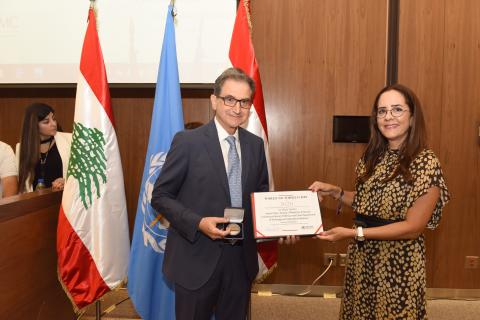
WHO World No Tobacco Day 2020 Award to Dr. Ghazi Zaatari

We’re proud to announce that Dr Ghazi Zaatari, Interim Dean, Faculty of Medicine, American University of Beirut, Professor and Chair; The Waterpipe Tobacco Smoking Knowledge Hub Director based at AUBMC – American University of Beirut Medical Center American University of Beirut (AUB) has been awarded the prestigious World No Tobacco Day 2020 award – one of the Eastern Mediterranean Region awardees winners.

Every year, WHO recognizes individuals or organizations in each of the six WHO Regions for their accomplishments in the area of tobacco control. This recognition takes the form of WHO Director-General Special Recognition Award and World No Tobacco Day Awards.

Check the World No Tobacco Day 2020 awards – the winners list by clicking on the link below:

https://www.who.int/news-room/detail/22-05-2020-world-no-tobacco-day-2020-awards-the-winners

Share

Image
Image

AUB Holds the WHO World No Tobacco Day 2020 Award Ceremony

Beirut: 9-7-2020

AUB Holds the WHO World No Tobacco Day 2020 Award Ceremony

On Tuesday, July 7, 2020, the American University of Beirut (AUB) held the distribution
ceremony of the World Health Organization (WHO) World No Tobacco Day 2020 Award under
the slogan ‘Protecting youth from industry manipulation and preventing them from tobacco and
nicotine use’. The prestigious award was granted to this year’s winner in the Eastern
Mediterranean Region (EMRO), Dr. Ghazi Zaatari, Interim Dean of the Faculty of Medicine at AUB.
The ceremony was attended by WHO representative in Lebanon, Dr. Iman Shankiti, AUB
president, Dr. Fadlo R. Khuri, the Coordinator of the AUB-Tobacco Control Research Group,
Dr. Rima Nakkash, WHO members, dignitaries, AUB leadership, family, and friends. Safe
physical distancing measures were maintained throughout the event. The ceremony was also
broadcasted live on WebEx. Several WHO regional and international members joined the
ceremony and gave live testimonies reflecting on Dr. Zaatari’s mentoring skills, achievements,
and role as an instrumental member of the organization.
In his speech, President Khuri said, “Dr. Zaatari is a distinguished and determined scholar and an
advocate for a tobacco-free tomorrow like few others. We are grateful for his outstanding
contributions, both past and current, related to tobacco control, tobacco product regulation, and
the health effects of traditional and novel tobacco products. All this despite the difficult
circumstances that the university, the country, and the world have been going through in 2020.”
He added, “AUB is doing everything possible to support our committed scholars, as well as
physicians, so that their contributions continue, and their visions for a better world and a brighter
future become a reality, and so that they can continue to mentor the next generation of stellar students.”

Dr. Shankiti welcomed the audience and announced that Dr. Zaatari has received the award in
recognition for his efforts in taking action against smoking. She indicated that the WNTD
Award recognizes individuals or institutions in each of the six WHO Regions based on their
outstanding contribution to the advancement of the policies and measures contained in the WHO
Framework Convention on Tobacco Control and its guidelines, particularly in relation to the
theme of World No Tobacco Day. In her address, Dr. Shankiti noted that the WHO will always
support the efforts of the Lebanese Ministry of Public Health, the American University of Beirut,
and all institutions and partners in the fight against smoking, to expand the implementation of all
the provisions of the WHO agreement in Lebanon. Dr. Shankiti congratulated Dr. Zaatari, AUB,
and Lebanon on an award well deserved at the end of her address.
A renowned pathologist for his distinguished efforts and investigative work on tobacco control,
tobacco product regulation, Dr. Zaatari has participated in several civil society activities and
served as an expert and speaker on tobacco control and tobacco product regulations at numerous
regional and international meetings and congresses.

Dr. Zaatari’s journey with the WHO started in 2004 when he joined the Geneva-based WHO
Tobacco Free Initiative (TFI) and its Study Group on Tobacco Product Regulation (TobReg). In
2008, Dr. Zaatari was appointed by WHO Director General as Chair of TobReg, a position he
continues to hold until the present day. The work that he is overseeing at TobReg has culminated
in publishing several WHO Technical Reports on Tobacco Product Regulation as well several
advisories. After TobReg, in 2005, Dr. Zaatari served on the Executive Committee of the WHO
Tobacco Laboratory Network (TobLabNet) and as of 2008, he attends the Conference of the
Parties (COP) to the WHO FCTC, held every two years. In 2016 and under his joint initiative
with Dr. Vera De Costa E. Silva, the Head of the Convention Secretariat of FCTC, AUB,
represented by President Fadlo Khuri, signed a memorandum of understanding to have AUB
designated as a global Knowledge Hub (KH) for Waterpipe Tobacco Smoking. At present, Dr.
Zaatari serves as its director.

In her turn, Dr. Rima Nakkash said, “Dr. Zaatari made his mark in the field of tobacco control
contributing to moving knowledge forward on many fronts due to his involvement at global,
regional, and national level and leading multiple tobacco control efforts.”
In his final speech, Dr. Zaatari thanked the curators for this ceremony and highlighted the efforts
of the American University of Beirut and its effective role in tobacco control. He said, ” I leave
you with this pondering question: the pandemic of the coronavirus has caught the attention of all
world leaders turned our world upside down and has claimed the lives of more than half a
million people. Yet, there is a pandemic of bigger magnitude, that of tobacco, which is
claiming the lives of 8 million people a year including an estimated 5000 Lebanese and one
billion by the end of the century but sadly many leaders and decision-makers remain watchful
bystanders lacking the resolve to turn around this disastrous tide.”

Please check all the pictures of the ceremony on this link: https://www.facebook.com/media/set/?vanity=waterpipeKH&set=a.1206847746318393

About AUB
Founded in 1866, the American University of Beirut bases its educational philosophy, standards,
and practices on the American liberal arts model of higher education. A teaching-centered
research university, AUB has more than 900 full-time faculty members and a student body of
about 9,100 students. AUB currently offers more than 120 programs leading to bachelor’s,
master’s, MD, and PhD degrees. It provides medical education and training to students from
throughout the region at its Medical Center that includes a full-service 420-bed hospital.


الجامعة الأميركية في بيروت تحتفل بتوزيع جائزة منظمة الصحة العالمية لليوم العالمي لمكافحة التبغ لعام 2020

أقامت الجامعة الأمريكية في بيروت نهار الثلاثاء 7 تموز 2020 ، حفل توزيع جائزة منظمة الصحة العالمية لليوم العالمي لمكافحة التبغ لعام 2020 تحت شعار”حماية الشباب من التلاعب الصناعي ومنعهم من استخدام التبغ والنيكوتين” للحائزعلى جائزة اليوم العالمي للإمتناع عن التدخين عن منطقة شرق المتوسط العميد المؤقت لكلية الطب في الجامعة الأميركية في بيروت وأستاذ الباثولوجيا (علم الأمراض) والطب المخبري، الدكتور غازي الزعتري.

شارك في الحفل ممثلة منظمة الصحة العالمية في لبنان، الدكتورة إيمان الشنقيطي، ورئيس الجامعة الأميركية في بيروت الدكتور فضلو خوري، وعدة أعضاء من منظمة الصحة العالمية ومنسقة مجموعة أبحاث مكافحة التبغ في الجامعة الأميركية في بيروت الدكتورة ريما نقاش، إلى جانب الإداريين في الجامعة والشخصيات وأفراد من المجتمع. وقد التزم الحضور بالحفاظ على مسافة آمنة. وتم بث الحفل عبر تطبيق ويبكس حيث انضم إلى الحضورعدة أعضاء من منظمة الصحة العالمية في المنطقة والعالم وشاركوا من خلال شهادات حية أكدت على المهارات التوجيهية التي يتمتع بها الدكتور الزعتري بالإضافة إلى إنجازاته المتعددة ودوره الريادي في المنظمة.

وقال رئيس الجامعة الدكتور فضلو خوري في كلمته: “إن الدكتور الزعتري عالم مميز وحازم ومدافعٌ قلّ مثيله عن مستقبل خال من التبغ. إنه لشرف عظيم لنا جميعا ً أن يتم تكريم إنجازاته عبر جائزة منظمة الصحة العالمية لليوم العالمي للإمتناع عن التدخين للعام 2020.” وتابع: “نحن ممتنون لمساهماته البارزة، في الماضي والحاضر، فيما يتعلق بمكافحة التبغ، وتنظيم منتجات التبغ، والآثار الصحية لمنتجات التبغ التقليدية والجديدة. كل هذا على الرغم من الظروف الصعبة التي تمر بها الجامعة والبلد والعالم في عام 2020.”

واضاف الدكتور فضلو خوري: “إن الجامعة الأميركية في بيروت تبذل كل ما في وسعها لدعم العلماء الملتزمين، وكذلك الأطباء، حتى تستمر مساهماتهم، وتصبح رؤيتهم لعالم أفضل ومستقبل أكثر إشراقاً حقيقة واقعة، حتى يتمكنوا من مواصلة توجيه الجيل القادم من الطلاب المتفوقين.”

بدورها رحبت الدكتورة الشنقيطي بالحضور وأعلنت أن الدكتور الزعتري حصل على الجائزة تقديراً لجهوده في اتخاذ إجراءات ضد التدخين. وذكرت أن جائزة منظمة الصحة العالمية لليوم العالمي لمكافحة التبغ تمنحها منظمة الصحة العالمية كل عام في كل إقليم من أقاليم منظمة الصحة العالمية الست تقديراً للأفراد أو المؤسسات على المساهمات البارزة في النهوض بالسياسات والتدابير الواردة في اتفاقية منظمة الصحة العالمية الإطارية بشأن مكافحة التبغ ومبادئها التوجيهية. وأشارت الدكتورة الشنقيطي في كلمتها إلى أن منظمة الصحة العالمية ستدعم دائماً جهود وزارة الصحة العامة والجامعة الأميركية في بيروت وجميع المؤسسات والشركاء في مكافحة التدخين، لتوسيع تنفيذ جميع أحكام اتفاقية منظمة الصحة العالمية في لبنان. وهنأت الدكتورة الشنقيطي في نهاية كلمتها الدكتورغازي الزعتري والجامعة الأميريكية في بيروت ولبنان على هذا الإنجاز.

بدأت رحلة الدكتور الزعتري مع منظمة الصحة العالمية في عام 2004 عندما انضم إلى مبادرة منظمة الصحة العالمية للتحرر من التبغ ومقرها جنيف وفريق الدراسة المعني بتنظيم منتجات التبغ. في العام 2005، عمل الدكتور الزعتري في اللجنة التنفيذية لشبكة مختبرات التبغ التابعة لمنظمة الصحة العالمية (TobLabNet) وفي العام 2008 تم تعيين الدكتور الزعتري من قبل المدير العام لفريق الدراسة المعني بتنظيم منتجات التبغ كرئيس TobReg وهو منصب ما زال قيماً عليه حتى اليوم. توج العمل الذي يشرف عليه في TobReg بنشر العديد من التقارير التقنية لمنظمة الصحة العالمية بشأن تنظيم منتجات التبغ وكذلك العديد من النصائح. ومنذ العام 2008 يتابع العمل عن قرب عبر حضور اجتماعات مؤتمر الأطراف التابع لأمانة مؤتمر اتفاقية منظمة الصحة العالمية الإطارية لمكافحة التبغ (FCTC) والذي يعقد مرة كل سنتين. وفي العام 2016، وفي إطار مبادرته المشتركة مع الدكتورة فيرا دي كوستا إ. سيلفا، رئيسة أمانة الاتفاقية في المؤتمر، تم توقيع مذكرة تفاهم مع الجامعة الأميركية في بيروت، ممثلة برئيسها الدكتور فضلو خوري، لجعل الجامعة مركزاً عالمياً للمعرفة (KH) حول تدخين النارجيلة. وفي الوقت الحالي، يشغل الدكتور الزعتري منصب هذا المركز.

وقالت الدكتورة ريما نقاش: ” لقد وضع الدكتور زعتري بصمته في مجال مكافحة التبغ وساهم في دفع المعرفة إلى الأمام على عدة جبهات بسبب مشاركته على المستوى العالمي والإقليمي والوطني وقيادة جهود مكافحة التبغ المتعددة.”

وبدوره، شكر الدكتور الزعتري القيمين على هذا الحفل وسلط الضوء على جهود الجامعة الأميركية في بيروت ودورها الفعال في مكافحة التبغ. وقال: “أترككم اليوم مع هذا السؤال المتأمل: لقد اجتذبت جائحة فيروسكورونا انتباه جميع قادة العالم، وقلبت عالمنا رأساً على عقب، وأدت إلى مقتل أكثر من نصف مليون شخص. ومع ذلك ، هناك وباء أكبر حجمًا، وهو انتشار التبغ، الذي يحصد أرواح 8 ملايين شخص سنوياً بما في ذلك ما يقدر بنحو 5000 لبناني ومليار شخص بحلول نهاية القرن، ولكن للأسف لا يزال العديد من القادة وصناع القرار يقفون متفرجين. فنحن تفتقر إلى العزم على تغيير هذا المد الكارثي.”

Share

Image
Image

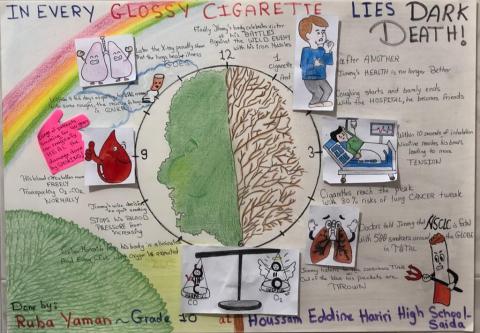
“Youth Anti-Smoking” VIRTUAL awareness competition 2020 with AMALOUNA NGO at AUB

We are sharing with you: Videos – Posters and pictorial messages who won during this year’s VIRTUAL competition for the “Youth Anti-Smoking” awareness campaign.
In the wake of the ongoing pandemic, AMALOUNA felt the need to continue with its awareness campaign, virtually, and to reach out to the youth in our community.
Accordingly, this virtual competition was carried out in collaboration with the Ministry of Education and Higher Education and Health and Wellness Center. It was also supported by CNRS-L.
Students from Public and private high schools were invited to design either a poster, video, or pictorial message about smoking (cigarettes, nargileh, e-cigarettes…).
The artworks that should promote an anti-smoking environment or show the adverse effects of smoking were scored by a committee and we are sharing the 1st and 2nd winners for each category.
 
Check the winner videos on our Facebook page:
 

Share

Image
Image

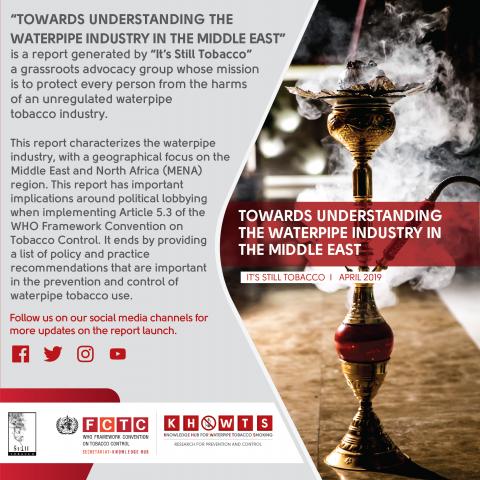
Towards understanding the Waterpipe Industry in the Middle East

Click to Read the Full Report

STILL TOBACCO REPORT


ABOUT IT’S STILL TOBACCO
It’s Still Tobacco is a grassroots advocacy group whose mission is to protect every person in the UK from the harms of an unregulated waterpipe tobacco industry. We aim to do this by becoming an authoritative source of waterpipe tobacco information and by advocating for stronger implementation of tobacco laws on the waterpipe industry.
We are a group of passionate community members with expertise ranging from medicine, public health, marketing, and law. We are ethnically diverse and many of us grew up in communities where waterpipe tobacco was and still is extremely common.
We are funded by community grants from the Big Lottery Fund and the Co-op Local Community Fund. We declare no conflicts of interest and have no ties to the tobacco industry or tobacco industry-funded organizations.
You can find out more about the group by visiting our website (www.itsstilltobacco.org) or following us on Twitter (@itsstilltobacco.org)

EXECUTIVE SUMMARY
In this report, we aim to characterize the waterpipe industry, with a geographical focus on the Middle East and North Africa (MENA) region. The lack of available data on this industry is well-known, so we used innovative methods to capture relevant information, such as assessing online news reports, discussion forums, restaurant directories, and tobacco industry journals and magazines. Our main focus is the waterpipe tobacco industry with some space dedicated to the waterpipe charcoal industry. Companies of focus are Al-Fakher and Al-Nakhla (currently two of the largest companies globally), and countries of focus include Algeria, Egypt, Morocco, Saudi Arabia, Tunisia, Turkey, and the United Arab Emirates.
We found that the MENA region holds the largest share in most countries globally waterpipe tobacco market. Despite the presence of two major players (Al-Fakher and Al-Nakhla) in most countries, the waterpipe tobacco industry is small and fragmented but growing, with leaders in individual markets
but no monopolies. Reasons for the sharp increases in sales in many markets between 2015 and 2017 are unknown and require further research. All waterpipe tobacco companies assessed, whether based in the MENA region or not, lacked age verifications and health warnings on their websites, and often had misleading marketing content. Waterpipe charcoal companies had similar problems; for them, misleading marketing around their coconut- or bamboo-based products was particularly concerning.
We also found that transnational tobacco companies are intimately linked to waterpipe tobacco companies. Japan Tobacco International purchased Al-Nakhla in 2013, Eastern Tobacco produces waterpipe tobacco as well as common brands for transnational tobacco companies, and Al-Fakher has employed a number of staff with vast experience working for transnational tobacco companies.
The most common marketing strategies of the industry continue to focus on flavors and the social
appeal of waterpipe use, and waterpipe companies readily attend and display these strategies at
international trade exhibitions. Innovations in the industry are at an early stage, with recent
developments including the creation of pre-prepared ceramic heads, expansion of flavor profiles, and the use of dry ice in the manufacturing process. The public face of the industry is, however, the hospitality sector (waterpipe cafes, bars, and restaurants), rather than the waterpipe tobacco companies. We found that online marketing is often dominated by individual waterpipe users and waterpipe cafes rather than by waterpipe tobacco companies, although more research needs to be undertaken on this topic. This has important implications around political lobbying when implementing Article 5.3 of the WHO Framework Convention on Tobacco Control (‘Article 5.3’).
We end the report by providing a list of policy and practice recommendations that are important in the prevention and control of waterpipe tobacco use.

ACKNOWLEDGMENTS
We thank the Tobacco Free Initiative Unit of the Eastern Mediterranean Regional Office for the efforts and role in supporting the initiation and development of this report.

Share

Image
Image

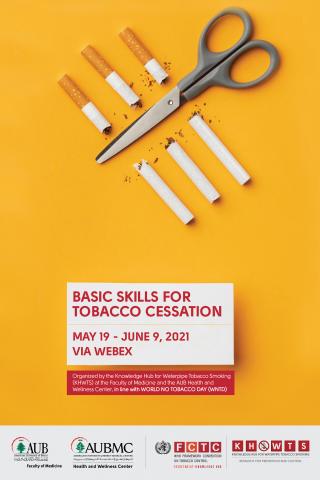
Basic Skills for Tobacco Cessation from MAY 19 – JUNE 9, 2021 VIA WEBEX

BASIC SKILLS FOR TOBACCO CESSATION

MAY 19 – JUNE 9, 2021VIA WEBEX

For the full online course check the PDF KHWTS Tobacco Use and Products PPT

For some recordings please check the link https://1drv.ms/u/s!AlFD9hhFyEINg6cJNfco67b9BNohwQ?e=gK1xO5

Organized by the Knowledge Hub for Waterpipe Tobacco Smoking (KHWTS) at the Faculty of Medicine and the AUB Health and Wellness Center, in line with WORLD NO TOBACCO DAY (WNTD).

GENERAL INFORMATION
Overview:
This online course is designed for health care workers and professionals who want to gain basic skills and knowledge to help tobacco users quit smoking.
It introduces the basic knowledge of tobacco use, nicotine products and dependence. It provides the attendees with the basic concepts of behavioral counseling therapy and motivational interviewing techniques in smoking cessation and finally it offers the most up-to-date evidence based tobacco cessation treatment pharmacology and strategies.
This course is a four-hour online program that will be conducted weekly between May 19 and June 9, 2021

Learning Objectives:
At the end of the course, the attendees will be able to:
1.Recognize the different types of tobacco products and the risks and harmful effects of tobacco use
2.Describe E-cigarette components, health effects, and risks
3.Understand the addiction neurobiology and clinical aspects of nicotine dependence
4.Identify the evidence-based techniques of Motivational Interviewing in tobacco treatment
5.To demonstrate a Motivational Interviewing interview in tobacco treatment
6.Understand the importance of behavioral support in tobacco cessation
7.Recognize changes in lifestyle, and challenges during a quit attempt
8.Provide appropriate follow-up and support for quitters
9.Recognize the different pharmacological treatment options for smoking cessation
10.Discuss the tobacco treatment options in pregnant, children, adolescents and elderly

Course Director:
Maya Romani, MD, DipIBLM, TTS, CCWS
Assistant Professor of Family Medicine
Tobacco treatment specialist
Director, Health and Wellness Center
Faculty of Medicine
American University of Beirut

Faculty:
Farid Talih, MD
Assistant Professor
Sleep and Addiction Medicine
Adult Psychiatry

Nadim Kanj, MD
Assistant Professor of Clinical Specialty
Pulmonary and Bronchoscopy
Smoking Cessation Program

Nour Alayan, PHD, RN
Assistant Professor
Ph.D. Nursing
Behavioral Health
Addictions

Taline Demerjian, RN, MPH
Registered Nurse

Please check this document for the programs agenda and further details:

KHWTS WORKSHOP SYLLABUS

Follow us on our social media platforms for the weekly links for the sessions!

Share

Image
Image

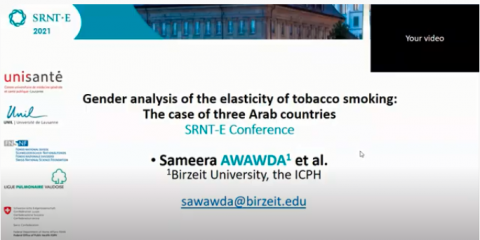
A new article on gender analysis of the elasticity of tobacco smoking: the case of three Arab countries

Use this link to read the full article chalak et al 2021_DCE

ABSTRACT
Background Waterpipe tobacco smoking rates in the
Eastern Mediterranean region are among the highest
worldwide, yet little evidence exists on its economics.
Estimates of demand elasticities for tobacco products are
largely limited to cigarettes. This study aimed to estimate
own-price
and cross-price
elasticities of demand for
cigarettes and waterpipe tobacco products in Lebanon,
Jordan and Palestine.

Methods

A volumetric choice experiment was
conducted using nationally representative household
surveys. The choice experiment elicited respondents’
stated purchases of eight cigarette and waterpipe
tobacco product varieties by hypothetically varying prices.
Data were analysed using zero-inflated
Poisson models
that yielded demand elasticity estimates of cigarette and
waterpipe tobacco consumption.

Results

The study included 1680 participants in
Lebanon (50% female), 1925 in Jordan (44.6%
female) and 1679 in Palestine (50% female). We
found the demand for premium cigarettes to be price
elastic (range, −1.0 to −1.2) across all three countries,
whereas the demand for discount cigarettes was less
elastic than premium cigarettes in Lebanon (−0.6) and
Jordan (−0.7) and more elastic in Palestine (−1.2). The
demand for premium waterpipe tobacco was highly
elastic in Lebanon (−1.9), moderately elastic in Jordan
(−0.6) and inelastic in Palestine (0.2). The cross-price
elasticity between cigarettes and waterpipe tobacco
was near zero, suggesting that the two products are not
considered to be close substitutes by consumers.

Conclusions

These results serve as a strong evidence
base for developing and implementing fiscal policies for
tobacco control in the Eastern Mediterranean region that
address cigarettes and waterpipe tobacco products.

Here is the youtube link

Share

Image
Image
Subscribe to